

The 2026 Day is dedicated to
Alberto Fortuzzi
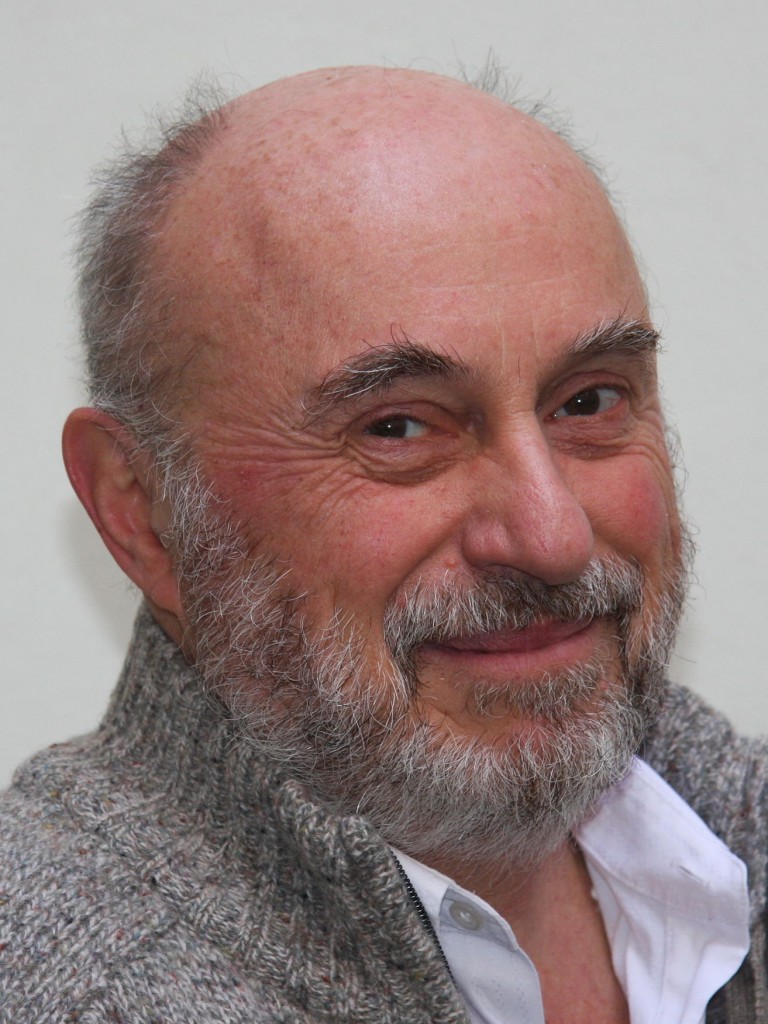
Alberto Fortuzzi
Trained as an actor at the school of Alessandro Fersen in Rome. His professional activity began in 1975 at the Teatro Stabile in Bolzano.
After a season at the Teatro Stabile he meets Kate Duck in Rome, fresh from the experience of the Fools of Amsterdam with Carlos Trafic and Jango Edwards, with whom he discovers the wonderful way of the Clown.
In 1979 he left for Paris where he was lucky enough to attend the school of Jacques Lecoq, at that time the best clown teacher in the world.
In 1982 / 83 he went on stage in various productions with the Clown Theater du Malentendu company. In 1985, after having collaborated with various French companies, he was lucky enough to have Dario Fo himself as a teacher.
Having moved on to the Commedia dell’Arte, he played the role of Harlequin in Goldoni’s “Servant of Two Masters” for several years. Path that ends in 2000 with the staging of the same comedy where Arlecchino (played once again by himself) leaves the traditional half mask for the Clown nose.
In the following years, thanks to a collaboration with the Berlin Conservatory “Hanns Eisler” he dedicated himself to opera direction: Falstaff (Verdi), Don Giovanni (Mozart) and Arianna a Nasso (Richard Strauss) are the crowning of a dream in the drawer.
After the years of the conservatory he returned to the stage in 2008 with “Francesco, giullare di Dio” by Dario Fo, Theater Rotwelsch Reutlingen production. Very long tour in Germany with more than 100 performances.
2009-2014 Again as director: “George Dandin” by Molière, “Candide” by Voltaire, and “Mandragola” by Machiavelli, prod. Monbijou Theater Berlin.
Since 2016 he has been working on social theater projects in the regions of former East Germany. In these workshops he brings Clown techniques to unemployed young people to give them back that creativity, which in more than one case has allowed them to take back their lives.
Since 2021, he has directed, for the company Laboratori Permanenti in collaboration with Theater Rotwelsch, the production Fear Eats the Soul by Rainer Werner Fassbinder, also overseeing the translation and bringing the text to Italy for the first time.
In 2024, he translated and directed Mother Courage and Her Children by Bertolt Brecht, a co-production by Laboratori Permanenti, Teatri D’Imbarco, and Catalyst.
In memory of Alberto Fortuzzi
Testimonials
-
Thorbjörn Björnsson
It is easy to imagine that everybody who knew Alberto, has a strong picture and feeling in mind, when thinking about that man. It‘s hard not to. Even though he was not always the tallest in the room, he was not to be overseen, without seeking any of the attention for himself. When it came to the arts, he stood firm on the ground, knowing what he wanted, staying ready for surprises and what he wanted was the people and their emotions.
Alberto Fortuzzi was a worker of the arts and for the people. He played a very big role in my life, as he still does. He was my teacher, director and colleague. He was my mentor and my friend. At the beginning of my studies in Berlin, I tended to idolize him, seeing how skilled, clever and unexplainably unique he was. Over the years we began looking each other eye to eye, as two artists that respect one another that are fond of each other. This was meaningful and taught me more than in all the classes at the university.
Alberto was indeed a person of tradition, education and learning and although he celebrated accuracy and craftmanship, the center of his artmaking-organs was his heart and his stomach. And what he did was for the people watching and not for himself.
Thank you maestro.
Yours, Tobbi.
-
Caterina Casini
Two different plants, yet sharing the same soil. But in motion. If there are plants capable of putting down roots and also of flying, that is the image I have of my friendship with Alberto.
We met in ’74. After class he would give me a ride in his white Fiat 500, because to pay for drama school I worked as a babysitter in the neighborhood where he lived with his family and his beloved sisters.
He came to Sansepolcro and met my brothers. We were not even twenty. It was the 1970s — in Rome the battle raged — but we had this passion for theatre that carried us elsewhere, soon to Paris to study Commedia dell’Arte. Then I returned and he stayed. Then we built projects together again, then more departures, meetings between one train and the next, group journeys discovering Europe, organized in between one artistic path and another, letters in which we would take stock of ourselves, of the work, of life, of what each of us was going through. A long journey in which I was kept informed about his path in Germany, his satisfactions as an artist, his affections, his vision of theatre.
Until a few years ago, when Alberto returned to Italy. I was rooted with an artistic residency in Tuscany; he proposed a project on Fassbinder and then another — Mother Courage by Brecht — in which our paths found, even in technique, a shared color and temperature. And we set off again into dialogue, this time more intense, constant, affectionate, sometimes hard — I would even say accelerated. I found him confident, mature, ironic, wise, parallel.
He too put down roots.
And we flew.
With an awareness of time.
-
Paolo De Vita
A few words about Alberto—though they will never be enough.
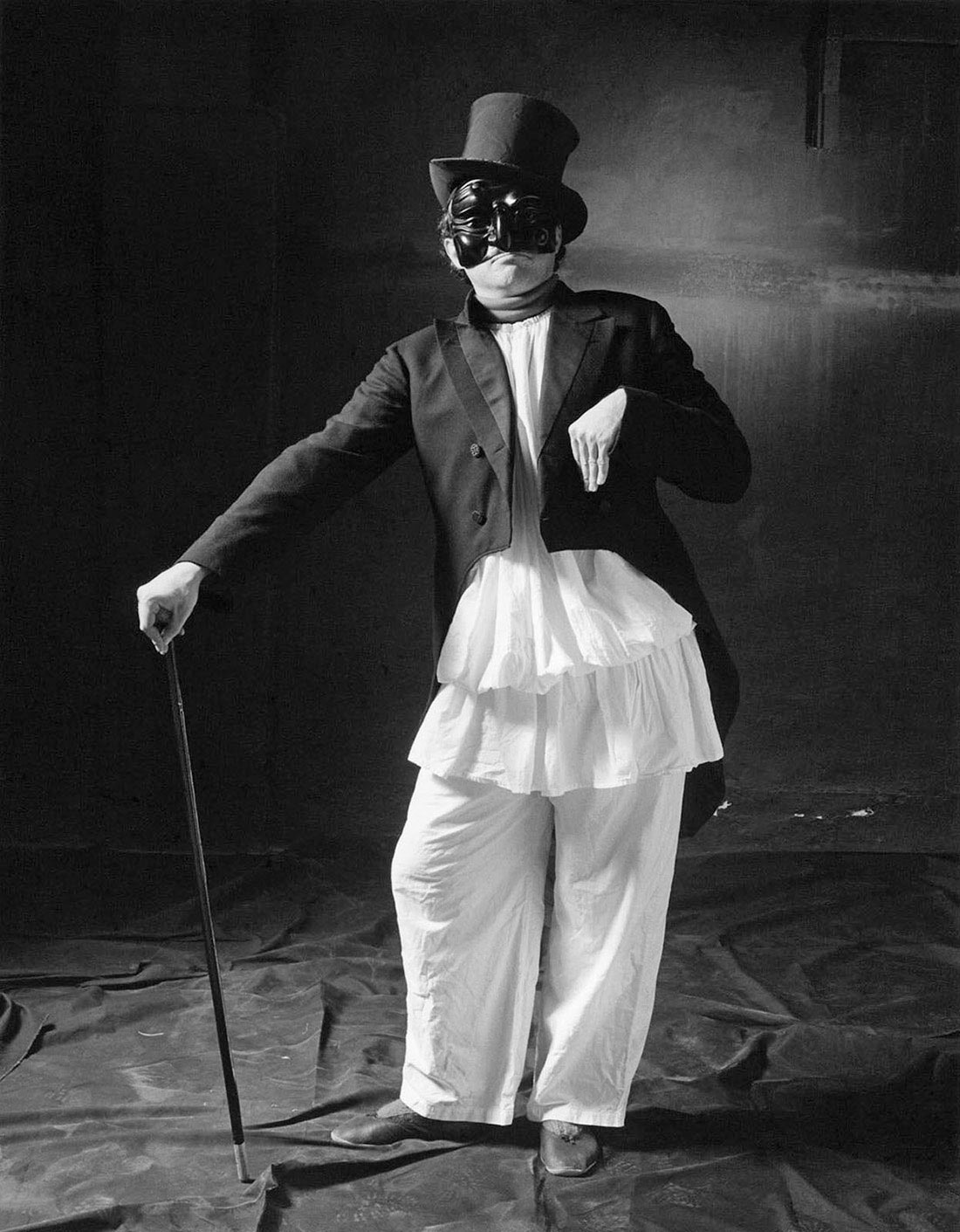
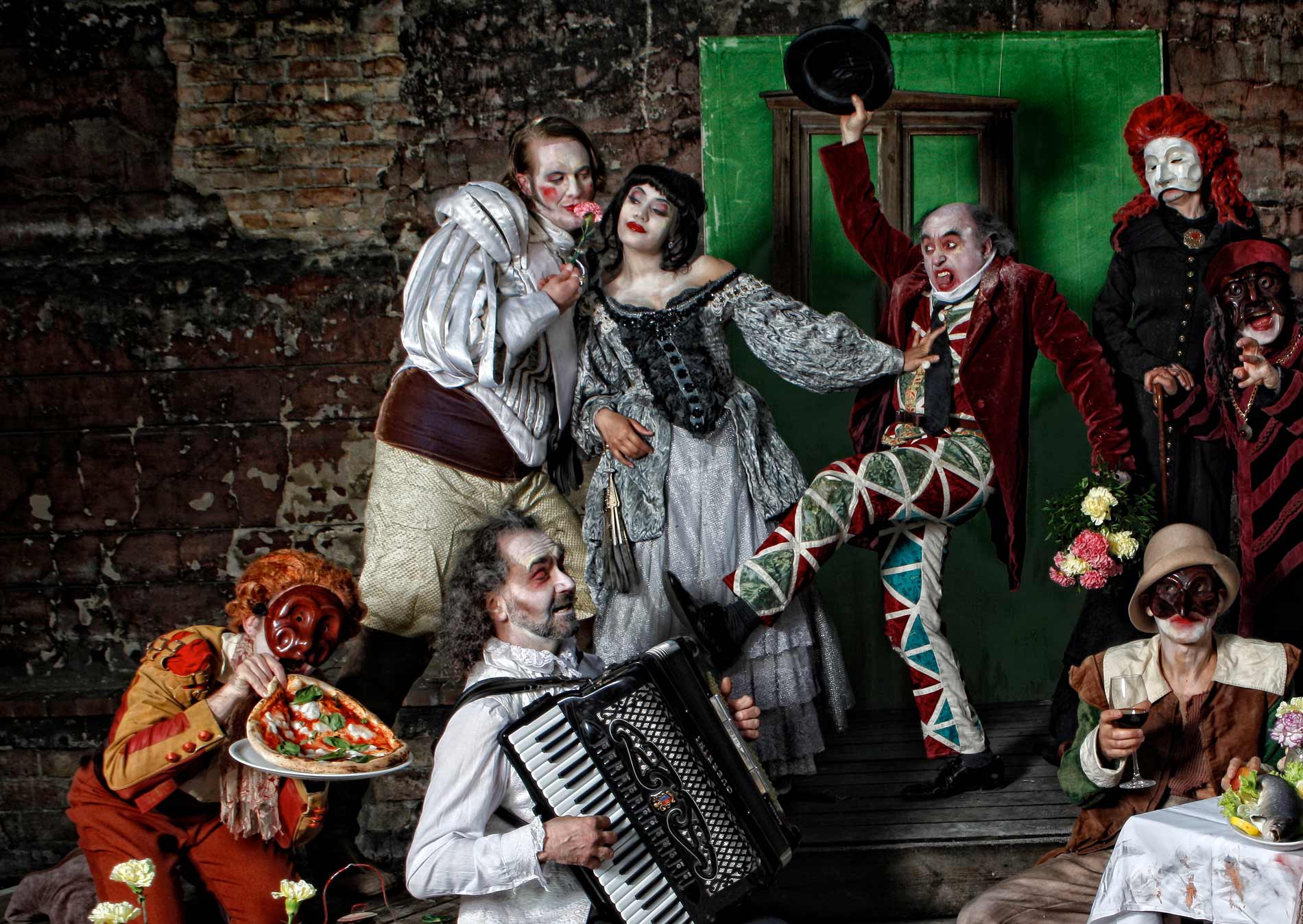
Alberto and the mask: an inseparable pairing between the person and the actor, between the master and the pupil, between his hypertrophied ego and his modesty, between inflexibility and his restrained gentleness. Arlecchino, Pantalone, Pulcinella — and Alberto. A kaleidoscope of emotions that Alberto always set spinning, both frenetically and laboriously, so that no one could ever truly discover what the real color was, the true feeling, his own inner sensibility — always so deep, always so fully engaged — his yearning for perfection and his clownish instinct, which found their synthesis in the saying: “If you really have to do it, then do it as well as possible!”
We all remember his face, and I am sure we all remember his smile — often gentle, almost never boisterous, a little crooked, in short — and his obstinately severe gaze that nevertheless always left a crack open to the question: “Am I doing it right or not? Is he making fun of me?” Alberto loved everything he did, and he always poured all his generosity into his work, along with the desire to see his students grow, to rise and expand in their awareness of the body, in their consciousness and in their will to learn again and again — because learning, I believe, was his favorite hobby. Learning in order to give others the best possible Alberto.
The last time we met in Florence, by then “seasoned” and inoculated by the vicissitudes of the profession, he told me that yes, it wasn’t right — and with a smile he added that it was all right anyway, and that, essentially, the last word had not yet been spoken. True.
For Alberto, words will never be enough.
-
Rosa Masciopinto
Companion in art and in life
Here I am, searching for the words to tell a story that lasted many years, from 1981 to 2010, as Alberto’s companion in life first, and later in work — an extraordinary human being whom I never knew except as an artist, always and above all else. His dedication to theatrical research was absolute; his entire life was permeated by it, and anyone who was part of that life had to come to terms with it.
I met him in Paris, where I had gone to study, at his place on the legendary Rue Lepic, where theatre students, aspiring dancers, and future musicians would regularly gather for epic parties fueled by terrible wine, given how empty all our pockets were — Italians, French, Dutch, Germans… united by a great shared dream, a passion that burned fiercely, making us fall in love once a week and despair every other day, sparking ideas and projects at a frantic pace, and binding us in powerful relationships, some of which still endure. To say we were young is an understatement: we had left behind families, universities, and certainties in search of a future that would belong only to us, in the most cosmopolitan city of those years. But who was this young man with gentle eyes and velvety words?
So I went to see him on stage, where he was playing Christopher Columbus with a clown’s red nose — that nose through which we discovered so much, and which allowed both of us to realize so much throughout our lives in the theatre. And we fell in love.
Over time I came to understand that more than romantic love, what truly bound us together was our love for the stage boards. We were perfectly suited for what lay ahead of us; we were more powerful as a pair than alone, and through our projects we were always able to reassure and involve many young artists, many friends.
He staged Pierre Gripari’s fairy tales for French children with the Compagnie Calcophane; I collaborated with the G.T. Comic Cooperative in Rome. Then he came to Rome to direct my company, and I performed as an actress for Calcophane; I organized the Café Teatro Casablanca of Humor Side in Florence, where he experimented with Beckett. Our shared research into clowning, masks, and comedy continually found new ways, forms, and places in which to grow and evolve.
From my training in Commedia dell’Arte with Carlo Boso — of whom Alberto was assistant for many years — we experimented and created all over Europe, forming and dissolving companies, until a wonderful tour in Canada, New York, and Philadelphia. We transformed a former grocery store in Rome into a home and atelier, with the help of his family, who always welcomed me like a daughter, alongside the four sisters Alberto had.
Then one grows and changes: he wanted to be an actor, and I wanted to be a company leader; he wanted to fall in love continuously, while I was searching for a more contemporary, pop-inflected language. So he was hired by the Teatro Stabile di Bolzano for several Shakespeare productions, while I created my duo Operà Comique, which for fifteen years, in nearly all its creations, had Alberto not as director but as comedy coach—a role that caused him suffering and was deeply connected to his later choices.
In Italy, television cabaret was booming, and I managed to carve out a space for myself, but audiences were growing increasingly intolerant of masks and the red nose. Alberto chose to emigrate to Germany, seeking—and finding—more dignified spaces for his research. We separated.
From that point on, there is far more documentation about him than I could ever provide.
We met again in Berlin in 2010, when he asked me to co-direct *George Dandin* by Molière with his company Lazzo Mortale, for the splendid Halleshen Hufer production, which featured original music composed by his great friend Dante Borsetto, with whom he had collaborated countless times.
It was then that we realized our visions of the actor had definitively diverged: I had been teaching for more than ten years, and he had two children from his second marriage; I wanted to work in my own language, while German had been his since childhood. For me, Commedia dell’Arte had been a necessary school of dramaturgy, while for him it remained one of his most beloved forms. When we said goodbye, we knew that—as artists—it would be forever.
We reconnected by phone when he fell ill, and never once did he make me feel discomfort or suffering: his intelligence was greater than that. The cynicism for which he was known transformed into sarcasm, shining with wise irony.
Alberto had many students; the Italian ones I now see as mature artists on television, in film, or on various stages. He had many women who loved him; having grown up among five women, he knew well how to treat them. He claimed not to believe in friendship, yet the eyes of those who knew him or worked with him light up every time he is mentioned—whether in gratitude or even in resentment. His ego compelled him to move quickly, never to look back, often to sow impatiently, to the point of growing bored before the harvest.
He made me suffer—but he also made me very happy.
-
Tony Nardi
Some people in our lives don't have to be standing before us for their presence to be felt, to make a daily impact on us. That was Alberto for me. In a country (Canada) drowning in clichés about certain acting methodologies (specifically Commedia dell'Arte), Alberto happened at the right time.
It was all by accident, or so I think. But was it? I have always seen that trip to Rome in 1985 as an important turning point for me—not only because it was my first trip back to Italy since emigrating to Canada as a child but also for reconnecting me to a process of acting that was, on the one hand, intrinsically familiar to me and, on the other, felt like a long-lost relative that would take some time to get reacquainted. Alberto became that vital connecting tissue for me. Connecting and collaborating with—and learning from—a practitioner whose practical understanding of the craft was so distilled and comprehensive at such a young age was a blessing I recognized even then.
Alberto was 30 (I was 27). His historical and practical knowledge of commedia, however, put him at 60, at least. He was older and wiser than his years when it came to understanding and communicating Commedia dell'Arte as an acting template. Alberto was a steady, constant, and even relentless light illuminating the path to practical craft knowledge. And though our most intense collaboration happened between 1985 and 1990, his presence and knowledge, even from afar, were a constant guide for me, a grounding I could rely on.
And though I still feel his presence as intensely as ever, the fact that he is gone makes my situation a little more precarious and uncertain—in thought and, no doubt, in practice. Sometimes knowing you can call someone to get clarity or perspective allows you to kick into a higher gear on your own without having to call them. When they’re gone, it’s as if the 5th-century Venetian engineers died all at once, and their absence suddenly making even the most ardent believers and apprentices wonder whether the over 10,000,000 underwater wooden logs supporting the city will, in fact, hold up.
-
Winni Victor
In 1986, Schauspiel Frankfurt took Carlo Goldoni’s The Servant of Two Masters („Il servitore di due padroni“)in its program. The intention was not to create a German adaptation or reinterpretation of the Commedia dell’Arte play, but to remain faithful to Goldoni’s original Commedia intentions. The Italian director Bernardi brought Alberto Fortuzzi with him: his task was to train the actor playing Arlecchino in the performance style of the Commedia dell’Arte.
For the German actor, this theatrical language was entirely foreign; he could not master it. Shortly before the premiere, the decision was made that Alberto himself should take over the role. His German at the time was, strictly speaking, not good enough—but what did it matter? It was enchanting: his acting, his comic presence, and his way of handling a language that was still quite unfamiliar to him. That was how I first came to know him. At the time, I was a director at Schauspiel Frankfurt and immediately thought: I want to work with this man. This did not happen in Frankfurt. Shortly afterward, Alberto moved on to the theatre Graz. In 1993, my husband, our family, and I left Frankfurt and moved to Berlin. There we met again: Alberto as a freelance actor, and I with my own independent company. That year marked the beginning of our collaboration. At first merely a member of my ensemble, he increasingly became a friend and an artistic interlocutor. He performed in my productions; I accompanied a number of his productions as dramaturg, editor, and conversation partner. Through these exchanges, I learned a great deal from him: about the Commedia dell’Arte, its characters and modes of characterization, about mask work, and about dialogue with the audience.
In 2008, he performed „Franziskus – Gaukler Gottes“ („Lu Santo jullare Francesco“) by Dario Fo in my production. We played the piece over several years. After 150 performances, I stopped counting.
We often spoke about theatre trapped in the dead end of naturalism, about strained attempts at topical relevance, about comedy—and, of course, about what the art of the Commedia dell’Arte could offer our work today: abstraction on the one hand, and immediacy and spontaneous joy in performance on the other. From 2012 onward, I focused more on music theater and founded the Reutlinger Kammeroper. Alberto was part of it: on stage as speaker, moderator, and playmaker, as a comic companion to the singers—and offstage as a trusted interlocutor. We invented pantomimic and dance-like scenes to musical works that had originally been conceived purely as concert pieces, such as „Blasons anatomiques“ by Wilhelm Killmayer, and for example expanded „Pierrot Lunaire“ by adding an Arlecchino who accompanied the Pierrot singer, sometimes ironically countering her, sometimes tenderly supporting her through her scenes. Our final project, „Rinaldo“ by G.F. Händel—for four singers, accordion or theorbo, and Alberto as joker and playmaker—could not be realized anymore.
R.I.P.
In memory of Alberto Fortuzzi
Dante Borsetto remembers him through the music he composed for his productions.
Alla riva del mar
In sul verde fiorir
Sentiva lamentare
Trapezio
Director Alberto Fortuzzi entrusted me with the task of setting to music three sonnets by Ruzzante, asking me to be romantic yet at the same time ironic, with a circus-like flair, in order to counterbalance the dramatic intensity of Ruzzante’s play La Moscheta, performed by the Kaser, Wande Theater company of Bressanone. This was done with the understanding that we musicians would perform the music live, dressed as clowns, with red noses and short trousers.
(Dante Borsetto – accordion, Costantino Borsetto – drums, Fabio Contillo – clarinet, Alvise Stiffoni – cello, Danilo Gallo – double bass)
Video
"George Dandin" von Molière, Bearbeitung Alberto Fortuzzi und Winni Victor